

compassion, connection, empathy, Love, Obliterate Hate, RECK, respect

Election 2020: The Tale of Two Echo Chambers

I have been watching a LOT of news coverage this week and, for the life of me, I can’t understand why none of the major news media is reporting on the fact that this presidential race is so incredibly close, because no one from one side is listening to what the other side is saying. This presidential election shows in stark detail how every American now lives in their own personal echo chamber, with everything they already believe to be true simply echoed back at them through various media.

I have been seeing posts by people on the left saying that X number of people voted for President Trump even though they knew he was a racist, misogynist, xenophobic… and on and on. My response to that is NO, they did not know any of those things. People on the right don’t watch the same news you do, don’t see the same social media you do, and sure as heck don’t listen to the same talk radio you do. This country is incredibly divided and the way Americans consume media is only making it worse.

My mission in life is to think of, view, and treat all people with respect, empathy, compassion, and kindness (RECK). And I make an effort to do that with everyone, no matter where they fall on the political spectrum. And I have to tell you… no one who supports Donald Trump believes anything the mainstream media says about him. They just don’t. It doesn’t matter if the mainstream media says these things are facts. Supporters of Donald Trump listen to to Donald Trump, and they believe him. So, when President Trump says he has done more for Black people than any president since Abraham Lincoln, they say “Damn right!”

I think if any American wants to try to understand people on one side or other of the political divide then we need to start to consume some of the same media those people do. Otherwise, I feel like we are simply going to continue to misunderstand each other. And we also need to make a solid effort to stop vilifying one another. We are all Americans. We all love our country. We all want what is best for our country… we simply have different views of what that is.

Personally, I would like to see people come together and try to talk out there differences. I am fully aware of what a tall order that is, but I don’t feel like this level of division in our country is sustainable in the long run. And the more we see one another as enemies the more we will fight like enemies. And I for one do NOT want another Civil War.

Let’s keep working on ourselves. Let’s work hard on ourselves not to hate anyone. Oppose that which you see as wrong-headed, but make an effort to love one another. We can bring this country back together. We can reduce the divide. And reducing the hate starts in our own hearts.

Much love to you all,

Matthew Vasko

Founder, Century of Compassion

compassion, empathy, kindness, Obliterate Hate, RECK, Well-Being

For Greater Inner Peace, Don’t Enimate!

Have you ever had such a difficult time with a person that you have come to think of them as your enemy? And then, almost unconsciously, you begin to imagine them doing all sorts of terrible things behind your back to sabotage you or actively do you harm. You start to imagine future scenes in which this person is being openly hostile towards you or picking a fight with you.

This can happen. We cast someone in the role of the enemy and then animate them in our minds doing all sorts of horrible things that might even cause us to begin the resent or dislike them more… or even actively hate them. I have coined a term to help describe this process of enemy animation: I call it “enimate” or “enimation.” We animate people in our imaginations as our enemies behaving like enemies.

I’ve done this before and I suspect we all have. We enimate people doing all types of terrible things that validate our negative feelings towards them. But what I’ve learned over the years is that this type of obsessive thinking is much more harmful towards me than it is towards the other person.

First of all, it’s not true! The person hasn’t actually done the things we are imagining them doing. And they probably never will. We are making these individuals into worse humans in our minds by eminating them into these terrible stereotypes which they are not. They are full human beings just like us with a full range of emotions who also want to be well liked and even loved and admired (possibly even by us).

Secondly, enimation is ultimately harmful to ourselves. It gets our blood pressure up and turns us into angry and resentful people. The next time we see the person we’ve been spending our time enimating they might even wonder what the heck they have done to make us so angry towards them! It’s unhealthy for us both physically and for our relationships.

Instead of enimating people who get us upset with them, we should actively work to think of them with respect, empathy, compassion, and kindness (RECK). This will help us to calm down and it will help us find inroads to connecting with them. If you spend your time thinking of people with RECK instead of enimating them you will discover that the next time you see them you will suddenly have lots of positive things to say to them. You might even find yourself liking them and having better interactions with them.

So, don’t simply treat everyone you interact with every day with RECK, but also think of them with RECK. Imagine yourself being respectful, empathetic, compassionate, and kind towards them. You might be surprised how quickly this turns your relationships around and makes you feel more positive and happier.

With love.

Matthew Vasko

Founder, Century of Compassion

caring, compassion

It’s Compassionate to Wear a Mask

I’m struggling with the reality that wearing a mask during a viral pandemic has somehow become a political act. It truly doesn’t seem like it should be one. Here’s the simple fact of the matter: Wearing a mask will help protect others from catching the coronavirus if you have it (even if you are asymptomatic – meaning that you don’t know you have it, but you can give it to others). It’s not political; it’s medical science.

It’s the same reason that doctors and nurses have worn masks during surgery for a million years. They wear masks to protect the patient from their germs – not the other way around. Cloth masks are not worn to protect ourselves, they are worn to protect others from us.

Yet, somehow this fact of medical science has been politicized. Which is unfortunate, because here’s the thing: facts are just facts. They don’t pledge allegiance to a particular ideology or political party. They just are. And feeling like a fact is socialist doesn’t change the fact. It still is. And it’s not going to change simply because a person doesn’t like it very much.

And the fact that wearing a mask will help prevent you from giving the coronavirus to someone who might die from it makes wearing a mask an act of compassion. That is a truth. It is a truth based upon fact and it is unarguable. Wearing a mask says, “I care about you and I don’t want to make you sick.”

You might not like the truth that wearing a mask is an act of compassion and caring, but that doesn’t make it any less true. It still is. Caring about others is caring about others is caring about others. It doesn’t change based upon your political ideology.

Universal adherence to mask wearing will help slow the spread of the novel coronavirus. That’s a good thing. That’s a fact. If we all pitch in and do our part we can help to keep each other healthy. Yay us! Go humans!

So, please don’t think of wearing a mask as a liberal thing or a conservative thing. It’s neither. It is simply an act of compassion and caring that says, “I am doing my part to help keep us all as safe as possible during this pandemic.”

If it makes you feel better to wear a mask with an American flag on it, then do that. You can get one here. But wear a mask. Help to keep the most vulnerable among us safe. Be a hero. We believe in you.

As always, much love to you. Be well.

Matthew Vasko

Founder, Century of Compassion
compassion, RECK

Is Your Compassion at 11?

These are highly unusual times. This pandemic has many – if not all – of us on edge. We are worried about our families and loved ones, friends and acquaintances, coworkers and community members. And as we feel this compassion for the people we care about, it seems like it easily flows to others we hear about on the news or social media who are sick or laid off, working in hospitals or working essential jobs and putting their health on the line for the betterment of all. Plus, there is overlap between all of these groups. So, it might be a friend who is sick or an acquaintance who is working in a hospital.

My point here is this: It seems like almost anyone and everyone is relatable to us right now. We are all in this together. We are all going through a shared experience. And this seems to have had the effect of increasing our empathy and thereby our compassion for one another.

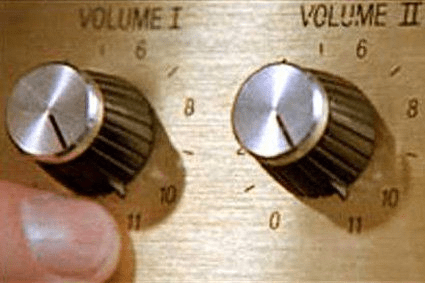
In the classic comedy “This Is Spinal Tap“, while describing his heavy metal band’s amplifiers, Christopher Guest states the famous line, “These go to eleven.” Doesn’t it feel right now as if your compassion is turned to 11? Like you feel for everyone everywhere and want so much for everyone to be well and for this terrible time to come to an end?

Our compassion is turned to 11. We are feeling deeply. Hoping greatly. I’m seeing it everywhere I look. On social media I see people being kinder to one another. More respectful. More caring. If you go out for a walk you might find that the people you pass on the other side of the street give you a friendly wave and maybe even smile and say hi.

And these are just the common occurrences. There are also tremendous acts of kindness and compassion. Parades of cars being formed to celebrate children’s birthdays. People singing from windows. Police departments showing up outside hospitals to cheer on healthcare workers.

There is a beauty in it. Yes, there is pain too. But there is beauty in this heightened compassion and greater empathy. While we are here, while it is happening, the first thing I wanted to do was to identify it. Look at us. Look what we are capable of. Look how good we can be to one another. We can get along. We can care more for one another. We can help support one another and cheer each other on. Go humanity!

Next, I want to say this: practice self care. Compassion fatigue is a real thing. This heightened sense of caring and loving is sustainable, but you have to take care of yourself and manage your own well-being. Humans simply aren’t designed to give and give without taking a little something back to help keep us going. So, take a little time for yourself. Don’t give all of yourself away. It seems like our experience with this pandemic might last a while so care for your heart so that you don’t get overwhelmed or exhausted. Practice the items I mentioned in my last post.

Finally: Dream of a brighter future. Who says that we ever need to go back to the way things were? Yes, of course I want things go back to normal with regard to seeing an end to this pandemic. But what if we don’t need to see an end to caring more for and about one another? Perhaps… now that we have been here… now that we have experienced this.. maybe just maybe this level of caring for one another can be the new normal. RECK can be the way of the future. It’s happening. A society filled with respect, empathy, compassion, and kindness is happening right now. And we can keep it this way. We can continue this well into the future. We just need to want to hold on to it. To continue to build upon it. To make RECK for all the new normal.

Thank you for reading. Thank you for turning your compassion to 11. And thank you for joining me in working towards a brighter future. Follow our RECK Pact page on Facebook for more daily inspiration.

All the best,

Matthew Vasko

Founder, Century of Compassion

compassion, empathy, family, kindness, Love, RECK, respect

Stuck at Home with Family? Practice RECK!

These are unusual times. The novel Coronavirus has more and more states telling people to stay at home and requiring Physical Distancing if we must go out. This puts many of us in a situation where we are “Safer at Home” with the people we love… and getting on each other’s nerves!

Never fear! RECK is here! To save you having to click over to another page to discover what the heck RECK is, I’ll take a moment to explain it here. RECK is an acronym that stands for respect, empathy, compassion, and kindness. It is meant as a simple guide to help us treat others in the best way possible. And don’t we want to treat the people we love most in the whole world in the best way possible? Of course we do.

Think of it this way: all people need respect, empathy, compassion, and kindness in order to stay emotionally healthy. When you think about harm that has been done to people, in every instance, one or more of these four principles has been violated. In family situations, most typically the principle we forget to adhere to is to be kind to one another.

Here’s how to utilize RECK at home during this unusual time:

First, do your best to remain respectful towards your family members at all times. This can be a tough one, especially when we are feeling irritable. Disrespectful words are usually those words that we end up regretting later. When it comes to trying to create a harmonious home atmosphere, being disrespectful is a line we simply should not cross. Being respectful towards your family all the time will help you maintain a healthy self-respect. When you are respectful to others, you feel good about yourself.

Next, make an effort to be empathetic towards the feelings of others. This one can be especially challenging with young children. They tend to feel things strongly and are often unable to completely articulate or even understand their feelings. As adults, we have an important role to play in helping them identify their emotions and learn to understand and control them. Remember, empathy is deeper than sympathy. Sympathy is to feel for someone, while empathy requires us to go even further and feel with them. A good way to understand empathy is to remember the adage of walking a mile in someone else’s shoes.

Then, strive to always keep your compassion switch in the “on” position. This is a tall order. Compassion calls us to feel another person’s suffering with them and then work to relieve it. Compassion, however, is a game-changer for children. Kids feel so often misunderstood and like their suffering is ignored. As adults, we can sometimes wish children would simply “get over it.” But we need to remember that their feelings are very real to them and when we take them seriously and respond to them, children feel heard. Although perhaps more pronounced in children, this is true for all people. And during these stressful times, lots of people might be feeling strong emotions. We all would be well served to hear one another out, take each other’s feelings to heart, and make an effort to provide comfort whenever possible.

Finally, in all situations and at all times: Be kind. If you think this one is easy or trivial, then think back to the last time that you know you hurt someone else’s feelings whether they said so or not. You might not have to think back very far! Kindness is the grease that oils the gears of healthy family dynamics. Being unkind is like throwing a wrench in the works. How often has everything been going just fine at home and then someone did or said something unkind and all heck broke loose? Kindness is the key to unlocking family harmony.

If your family is struggling to get along right now, then make a big sign that says “RECK: Respect, Empathy, Compassion and Kindness” and put it up someplace everyone can see it. Then, make sure everyone knows what all of those words mean and make a promise to treat each other with RECK. You’ll be amazed by how much better everyone gets along.

All the best,

Matthew Vasko,

Founder, Century of Compassion